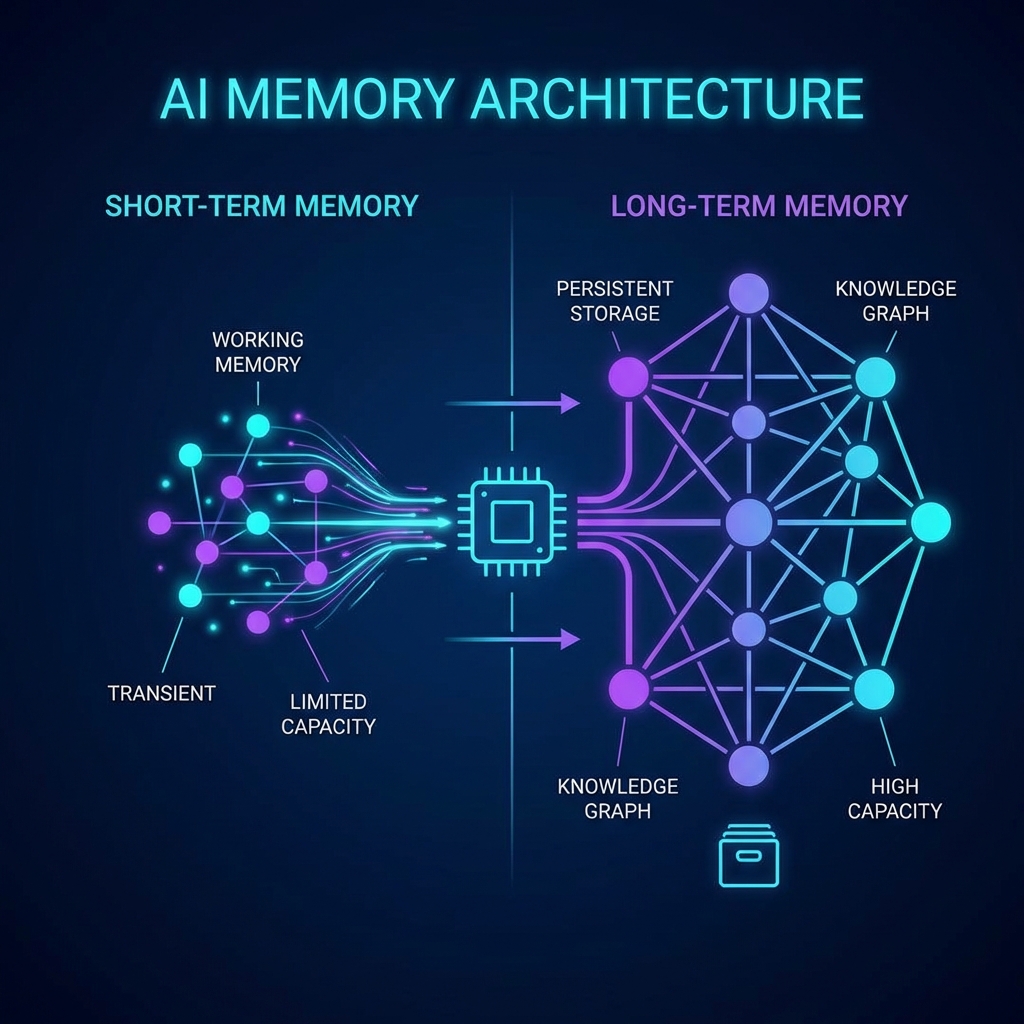
Before developing any AI agent, it is fundamental to define the context retention strategy. Memory is not just data storage; it is the backbone of the agent's "personality" and utility. We must ask ourselves the following about our application:
- Short-term Memory? Is it necessary to ensure continuity and fluidity of the immediate conversation?
- Long-term Memory? Does the agent need to remember facts from past sessions?
- Granularity? Should it store precise details or just the general concept?
- Retrieval? How will this information be stored, searched, and used?
Practical Example: Pam - Friendly AI Teacher

Figure 1: Pam, an AI agent designed to help users practice languages via WhatsApp.
The goal of Pam is to act as a friend conversing with you, a friend who has extensive language knowledge and suggests corrections whenever there is an opportunity.
In a conversation like this, an exact database with details of every subject is not necessary. Since the goal is to make the user speak and practice, I needed a history with only relevant information about the user, provided by them during the conversation: name, profession, hobbies, recent activities, music taste, etc.
answering the questions for Pam:
- Yes (Short-term): Configured so at least the last 10 messages remain intact to maintain flow.
- Yes (Long-term): Necessary for personalization.
- No (Details): It can be a memory that vaguely remembers information brought up by the user (summaries).
- Strategy: Summarized memory works, always passing the accumulated summary and the last few conversations to the LLM.
The Solution: Elastic Memory
In this case, I developed an "Elastic Memory" architecture. It functions as an intelligent buffer that adapts as the conversation evolves, managed directly by LangGraph.
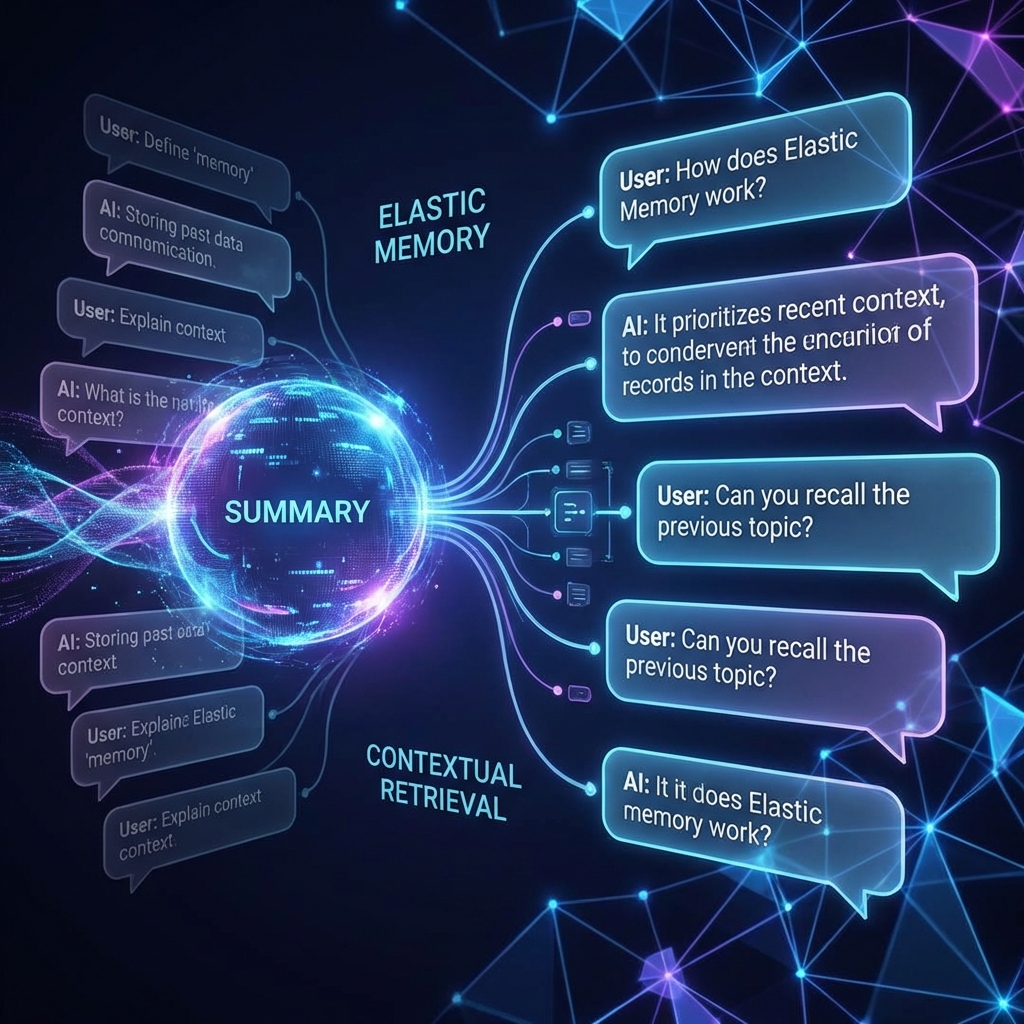
The dynamic works as follows:
- The conversation starts with only the system prompts.
- As the user converses, new messages fill the context window.
- When a token threshold is reached, the conversation is processed.
- The system generates a summary of everything except the last X messages (to ensure the AI doesn't "forget" what was just said).
- A new memory is instantiated containing:
[Previous Summary + New Recent Messages].
Benefits of this approach
- Conversation fluidity maintained
- Low token usage (Cost Reduction)
- Low response latency
- Simplified management
- Low storage cost
- Simple encapsulation in LangGraph